2026 World Cup Football Rules Guide: Offside, Shots on Target, Corners, Yellow & Red Cards and Penalties Explained
iBET Team — Malaysia sports betting and online entertainment content team
During the World Cup, many people who do not usually watch football suddenly start watching matches with friends, family, or colleagues. The match may look exciting, but once the referee blows the whistle, confusion starts: why was that goal ruled out? What is offside? What is the difference between a shot and a shot on target? Why is it sometimes a corner kick and sometimes a goal kick? What do yellow cards and red cards actually mean?
This iBET football rules guide is written for casual fans and World Cup beginners. We will not overcomplicate things with referee jargon. Instead, we explain offside, shots on target, corner kicks, yellow cards, red cards, penalty kicks, free kicks, handball, VAR, and other common football rules in a simple way, so you can follow the 2026 World Cup with more confidence.
Table of Contents
- Basic Football Rules: How a Match Works
- What Is Offside? Why Are Goals Ruled Out?
- Shot, Shot on Target, and Goal: What Is the Difference?
- What Is a Corner Kick?
- What Do Yellow Cards and Red Cards Mean?
- What Is a Penalty Kick?
- What Is a Free Kick?
- Throw-In, Goal Kick, and Kick-Off Explained
- How Is Handball Judged?
- What Is VAR?
- Added Time, Extra Time, and Penalty Shootout
- 6 Things Casual Fans Should Watch During a Match
- Continue Reading iBET World Cup Series
- Frequently Asked Questions
- A football match is played by two teams, with 11 players on each side, usually over two 45-minute halves.
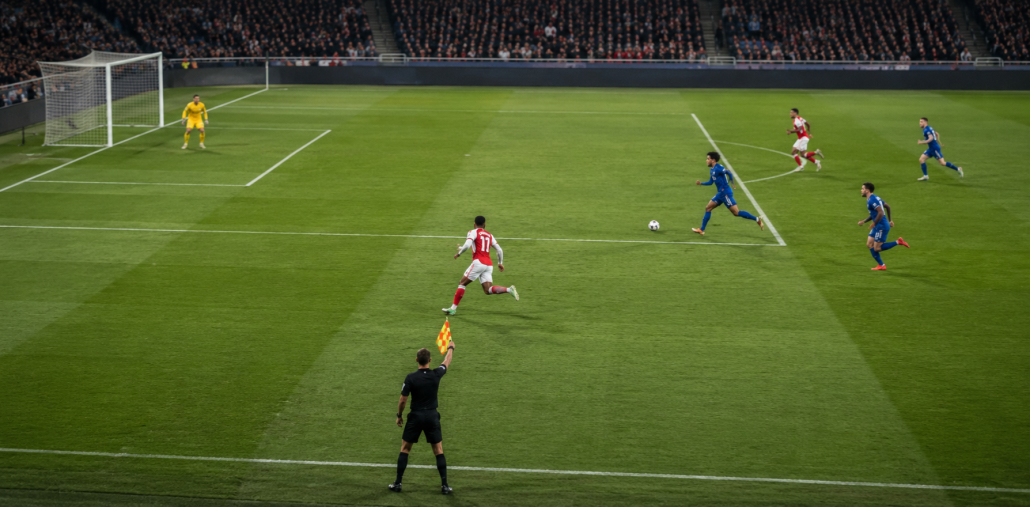
- Offside does not simply mean standing too far forward. The player must be in an offside position when the ball is played by a teammate and become involved in active play.
- A shot on target means the ball is heading into the goal area and would likely enter the goal if not saved or blocked.
- A corner kick is usually awarded when the defending team is the last to touch the ball before it crosses their own goal line.
- A yellow card is a warning, while a red card sends a player off. Two yellow cards for the same player become a red card.
- A penalty kick is usually awarded when the defending team commits a direct free-kick offence inside its own penalty area.
Basic Football Rules: How a Match Works
A standard football match is played by two teams. Each team has 11 players on the pitch, including one goalkeeper and 10 outfield players. The objective is simple: score more goals than the opponent.
A match is usually played over two halves of 45 minutes each. After half-time, both teams switch sides and continue the match. The referee may add stoppage time at the end of each half to make up for injuries, substitutions, VAR checks, time-wasting, and other delays.
Basic Concepts Every Beginner Should Know
- Goal: The whole ball must fully cross the goal line, and there must be no foul or rule infringement.
- Foul: Common fouls include pushing, pulling, tripping, dangerous tackles, handball, and reckless challenges.
- Out of play: The whole ball must fully cross the touchline or goal line to be out.
- Referee: The main referee controls the match, while assistant referees help with offside, throw-ins, and other decisions.
- VAR: Video Assistant Referee helps review major decisions such as goals, penalties, red cards, and mistaken identity.
Football is not always won by the team with more possession or more shots. Goals decide the match, but possession, shots on target, corners, cards, and fouls all affect the flow of the game.
What Is Offside? Why Are Goals Ruled Out?
Offside is one of the most confusing rules for new football fans. In simple terms, the rule exists to stop attacking players from waiting too close to the opponent’s goal for an easy pass. But being near the goal does not automatically mean offside.
Simple Way to Understand Offside
At the moment a teammate plays the ball, an attacking player may be offside if they are closer to the opponent’s goal than the second-last defender and become involved in active play.
Key points to remember:
- Offside is judged at the exact moment the teammate passes or plays the ball, not when the player receives it.
- Standing in an offside position is not automatically an offence. The player must become involved in the play.
- A player cannot be offside in their own half.
- A player is generally not offside directly from a corner kick, throw-in, or goal kick.
Why Are Some Goals Cancelled?
The most common reason is that the player who scored or assisted the goal was already in an offside position when the ball was played by a teammate. Even if the finish is clean, the goal can be ruled out after the referee or VAR confirms offside.
Look at the moment the pass is made. If the receiving attacker is already behind the last line of defence and then becomes involved in the attack, it may be offside. Do not only look at where the player is when they receive the ball — that is already too late.
Shot, Shot on Target, and Goal: What Is the Difference?
Football statistics often show “shots”, “shots on target”, and “goals”. These are not the same thing.
What Is a Shot?
A shot is any attempt by a player to score. The ball may go over the bar, wide of the post, or be blocked by a defender.
What Is a Shot on Target?
A shot on target is a shot that would enter the goal if it was not saved by the goalkeeper or blocked by a defending player. In simple terms, if the ball is heading into the goal area, it is usually counted as a shot on target.
What Is a Goal?
A goal is scored only when the whole ball fully crosses the goal line and there is no foul, offside, handball, or other reason to disallow it. A goal is always a successful attacking outcome, but not every shot on target becomes a goal.
| Term | Meaning | Example |
|---|---|---|
| Shot | A player attempts to score | The ball goes wide, over the bar, or is blocked |
| Shot on Target | The ball is heading into the goal area | The goalkeeper saves it, a defender blocks it, or it becomes a goal |
| Goal | The ball fully crosses the goal line legally | No offside, handball, or foul is involved |
What Is a Corner Kick?
A corner kick is an important attacking opportunity. It is usually awarded when the defending team is the last to touch the ball before it crosses its own goal line without a goal being scored.
When Is a Corner Kick Given?
- An attacking shot is saved by the goalkeeper and goes behind the goal line.
- A defender clears the ball behind their own goal line.
- A defender blocks the ball and it goes out behind the goal line.
- Under updated rules, a goalkeeper holding the ball for too long may also result in a corner kick.
Why Are Corners Important?
Corners allow the attacking team to send the ball directly into the penalty area. They can create headers, rebounds, scrambles, and second-ball chances. When strong teams face compact defences, corners and set pieces can become key scoring opportunities.
For beginners, if one team keeps winning corners, it usually means they are putting pressure on the opponent. A corner does not guarantee a goal, but it often shows attacking momentum.
What Do Yellow Cards and Red Cards Mean?
Yellow cards and red cards are used by the referee to control discipline. In simple terms, a yellow card is a warning, while a red card means the player is sent off.
What Is a Yellow Card?
A yellow card is an official warning. Common reasons include tactical fouls, reckless tackles, shirt pulling, time-wasting, dissent, repeated fouls, and unsporting behaviour.
If the same player receives two yellow cards in one match, they are shown a red card and must leave the game.
What Is a Red Card?
A red card means the player is sent off and cannot be replaced immediately. If a team receives a red card, it usually has to continue with 10 players against 11.
What Can Lead to a Red Card?
- Serious foul play, such as a dangerous tackle.
- Violent conduct, such as punching, elbowing, or kicking an opponent.
- Denying an obvious goal-scoring opportunity.
- Offensive, insulting, abusive, or discriminatory language or gestures.
- Receiving two yellow cards in the same match.
A red card does not just mean one fewer player. The team must often change its formation, defend more deeply, and reduce attacking risk. The match flow, goal expectation, possession, and betting markets can all change quickly.
What Is a Penalty Kick?
A penalty kick is one of the clearest scoring chances in football. It is taken from the penalty spot, which is around 12 yards from the goal.
When Is a Penalty Given?
A penalty is usually awarded when the defending team commits a direct free-kick offence inside its own penalty area. Examples include tripping, pushing, pulling, kicking, or handball inside the box.
How Is a Penalty Taken?
- The taker shoots from the penalty spot.
- The goalkeeper stays on the goal line before the kick.
- All other players must remain outside the penalty area until the ball is kicked.
- If the ball goes in legally, it counts as a goal.
Why Can a Penalty Change the Match?
A penalty has a high scoring chance. In a close match, one penalty can change the result. In World Cup knockout matches, penalty decisions are often reviewed closely, and VAR may be used to check fouls inside the penalty area.
What Is a Free Kick?
A free kick is a way to restart play after a foul or infringement. There are two main types: direct free kicks and indirect free kicks.
Direct Free Kick
A direct free kick can be scored directly. Common reasons include kicking, tripping, pushing, holding, and handball. A direct free kick near the penalty area can become a dangerous scoring opportunity.
Indirect Free Kick
An indirect free kick cannot be scored directly. The ball must touch another player before a goal can count. Offside offences usually result in an indirect free kick for the defending team.
How Can You Tell the Difference?
Watch the referee’s arm. If the referee raises one arm and keeps it raised, it is usually an indirect free kick. If the arm is not kept raised, it is usually a direct free kick.
Throw-In, Goal Kick, and Kick-Off Explained
When the ball goes out of play, the match restarts in different ways. Beginners only need to remember this: if the ball crosses the sideline, it is a throw-in. If it crosses the goal line, the decision depends on who touched it last.
Throw-In
A throw-in is awarded when the whole ball crosses the touchline. The team that did not touch the ball last takes the throw-in from the sideline.
Goal Kick
If the attacking team is the last to touch the ball before it crosses the defending team’s goal line without a goal being scored, the defending team gets a goal kick.
Kick-Off
Kick-off happens at the start of the match, at the start of the second half, and after every goal. After a goal, the team that conceded restarts play from the centre circle.
How Is Handball Judged?
Many fans shout “handball!” whenever the ball touches a player’s arm, but the rule is not that simple. Referees consider the arm position, whether the movement is natural, whether the player deliberately handled the ball, and whether the arm made the body unnaturally bigger.
When Is Handball More Likely to Be Given?
- A player deliberately touches the ball with the hand or arm.
- The arm is clearly extended and makes the body bigger.
- The arm is in an unnatural position and blocks a pass or shot.
- An attacking player handles the ball before creating a goal-scoring chance.
When Might It Not Be Given?
If the ball comes from very close range, the player has no time to react, or the arm is in a natural support position, the referee may decide not to give handball. This is why handball decisions often require replay review and can still be debated.
What Is VAR?
VAR stands for Video Assistant Referee. It is not used to review every small foul. Its main purpose is to help the referee check major decisions that can change the result of a match.
What Does VAR Usually Check?
- Whether a goal should stand, including possible offside or foul before the goal.
- Whether a penalty should be awarded.
- Whether a red card should be shown.
- Whether the referee has mistaken the identity of a player.
Why Does VAR Take Time?
Referees need to check key angles, such as offside lines, contact points, handball positions, and whether a clear and obvious error has happened. Waiting can be frustrating, but VAR exists to reduce major mistakes.
If a goal is scored and the referee is listening to the headset, the assistant referee does not move back to halfway, or the screen shows a VAR check, do not celebrate too early. The goal may still be under review.
Added Time, Extra Time, and Penalty Shootout
Many beginners confuse added time, extra time, and penalty shootout. They are three different things.
Added Time
Added time is played at the end of each half to make up for lost time caused by injuries, substitutions, VAR checks, and time-wasting. It is still part of the normal half.
Extra Time
Extra time usually happens in knockout matches. If the match is tied after 90 minutes plus added time, another 30 minutes may be played, split into two 15-minute halves.
Penalty Shootout
If the match is still tied after extra time, it may go to a penalty shootout. A penalty shootout is not the same as a normal penalty during open play. It is used to decide which team advances or wins the title.
| Term | When It Happens | Purpose |
|---|---|---|
| Added Time | At the end of each half | To make up for lost time |
| Extra Time | When a knockout match is tied | Another 30 minutes to decide the match |
| Penalty Shootout | When extra time ends level | To decide who advances or wins |
6 Things Casual Fans Should Watch During a Match
If you do not watch football often, you do not need to understand complex tactics immediately. Start with these six things and you will follow most matches much better.
1. Watch Which Team Controls the Ball More Calmly
More possession does not guarantee victory, but a team that controls the ball calmly usually controls the tempo. If one team is trapped in its own half for too long, defensive pressure will increase.
2. Watch Shots on Target, Not Just Total Shots
A team may take many shots, but if none are on target, the real threat is limited. Shots on target are usually a better sign of attacking danger.
3. Watch Corners and Set Pieces
Corners and free kicks are important ways for strong teams to break down compact defences. The tighter the match, the more important set pieces become.
4. Watch Yellow Card Accumulation
If a defender receives an early yellow card, they may defend more cautiously for the rest of the match because a second yellow means a red card.
5. Watch Substitution Timing
Substitutions often show tactical changes. Bringing on a striker may mean the team wants more attack, while bringing on a defender may mean they want to protect the lead.
6. Watch VAR Checks
When VAR appears, it usually means a major decision may be involved. Goals, penalties, red cards, and offside calls can all change after a VAR review.
Continue Reading iBET World Cup Series
This article helps casual fans understand basic football rules. If you want to learn more about World Cup viewing options, title favourites, dark horse teams, and betting tips, continue following the iBET World Cup series.
- 2026 World Cup Malaysia Viewing Guide: Streaming platforms, match times, popular teams, and betting tips all in one.
- 2026 World Cup Favourites Analysis: France, Brazil, England or Argentina — who has the best chance to win?
- 2026 World Cup Dark Horse Teams: Can Japan, Morocco, Colombia, or Croatia surprise the favourites?
Final Thoughts: Learn the Basics and the Match Becomes Easier to Read
Football rules may seem complicated at first, but casual fans do not need to memorise everything at once. If you understand offside, shots on target, corners, yellow and red cards, penalty kicks, free kicks, and VAR, you can already follow most key moments in a World Cup match.
Truly understanding football is not about knowing every law word by word. It is about knowing why the referee blows the whistle, why a goal is cancelled, and why one red card can change the entire match. Once you understand these details, the World Cup becomes more than just noise — it becomes real drama.
Ready to understand the 2026 World Cup better? Continue following iBET’s World Cup series, from rules and teams to players and betting tips.